
Recent Events Reported by Observers
Previous Next
Detected by Lakshmi Pradeep Chitta, Submitted at 2017-10-25T08:41:53
2017-10-14T05:06:43 --> 2017-10-14T06:25:53
The slit caught the axis of this ephemeral region. The transition region at the Northern region of this bipole shows a variety of broad line profiles similar to those seen in explosive events and ultraviolet bursts.


Detected by Lakshmi Pradeep Chitta, Submitted at 2017-10-25T08:22:05
2017-10-14T01:04:06 --> 2017-10-14T03:25:48
The slit caught a variety of turbulent plasma motions in this filament. The slit-jaw movies show a wider view of the filament and its evolution.


Detected by Wei Liu, Submitted at 2017-10-21T02:40:34
2017-09-09T13:06:38 --> 2017-09-09T17:01:45
In this flare-productive AR 12673. after the M3.7 flare, multiple small flares continue to occur. Slit covered quite a few of them. This is again rarely used full spectral readout mode that can be good data sets for flare studies.

Detected by Wei Liu, Submitted at 2017-10-21T02:37:02
2017-09-07T12:09:45 --> 2017-09-07T15:10:46
Flux emergence seen as growing sunspot area over hours in AR 12677, which we tracked for over a week (since Sep 1), uninterrupted (except for short calibration runs), until we switched to flare-productive AR 12673 for the Sept 9-11 interval. It's nice data set for studying AR evolution continuously.

Detected by Wei Liu, Submitted at 2017-10-21T02:29:51
2017-09-07T05:03:54 --> 2017-09-07T05:20:53
M2.4 flare from the super-flare productive AR 12673 caught in our regular B1 active region limb-to-limb tracking.

Detected by Wei Liu, Submitted at 2017-10-21T02:26:05
2017-09-09T09:41:27 --> 2017-09-09T11:35:45
Nice M3.7 flare caught under slit with rarely used full CCD readout for WL flare blackbody radiation study... Also note the nice wavy peacock tail in the sunspot prior to the flare onset.


Detected by Wei Liu, Submitted at 2017-10-21T02:20:46
2017-09-10T19:44:11 --> 2017-09-10T21:16:45
Continuous and episodic coronal rain formation following the X8.2 flare on Sep 10, 2017. Lasting even 10 hours after the flare onset.

Detected by Wei Liu, Submitted at 2017-10-21T02:14:34
2017-09-10T15:34:18 --> 2017-09-10T19:23:28
X8.2 flare on 2017-Sep-10, with supra-arcade downflows (SADs) caught by IRIS for the first time! The IRIS FOV covered the southern flare arcade and the SADs above it, appearing in the Fe XXI hot emission, within the 1330 C II slit jaw images. The main flare is toward the upper left corner of the IRIS FOV. Slit covered SADs and a small portion of on-disk flare ribbon. Also note the initial eruption perturbed the coronal-rain hosting loops. There was a lot of post-flare loop rain in the arcade.


Detected by halocme, Submitted at 2017-10-19T04:41:44
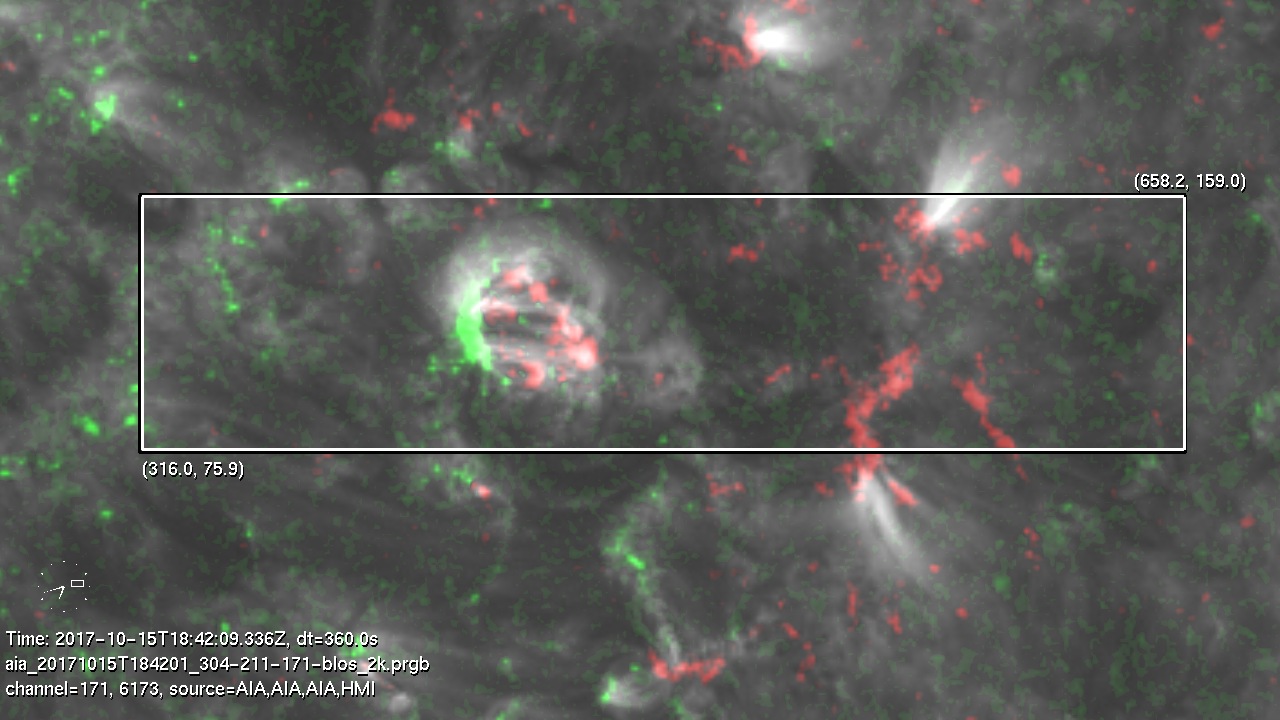
2017-10-15T04:00:09 --> 2017-10-16T16:00:09
Following several spotless days, AR 12684 emerged on 15 October 2017, but it did not survive even for a day. The spots disappeared already on 16 October, even though coronal structures remained. Welcome back to spotless days. The annotator software should be modified so that the object of "AR" can be used. Presently, we do not see the whole selection screen and the information, even if it is blank, cannot be saved.

Detected by halocme, Submitted at 2017-10-19T01:42:11
2017-10-18T05:25:13 --> 2017-10-18T10:00:01
As reported earlier, there were two eruptions on the far side (~E125) around the location that used to be AR 12673. The first one produced a notable EUV wave propagating across the disk, covering the whole longitudes in the visible hemisphere. The second one was minor propagating only along the limb (clockwise).

Detected by halocme, Submitted at 2017-10-19T01:41:49
2017-10-18T05:25:13 --> 2017-10-18T10:00:01
As reported earlier, there were two eruptions on the far side (~E125) around the location that used to be AR 12673. The first one produced a notable EUV wave propagating across the disk, covering the whole longitudes in the visible hemisphere. The second one was minor propagating only along the limb (clockwise).
Detected by halocme, Submitted at 2017-10-19T01:42:20
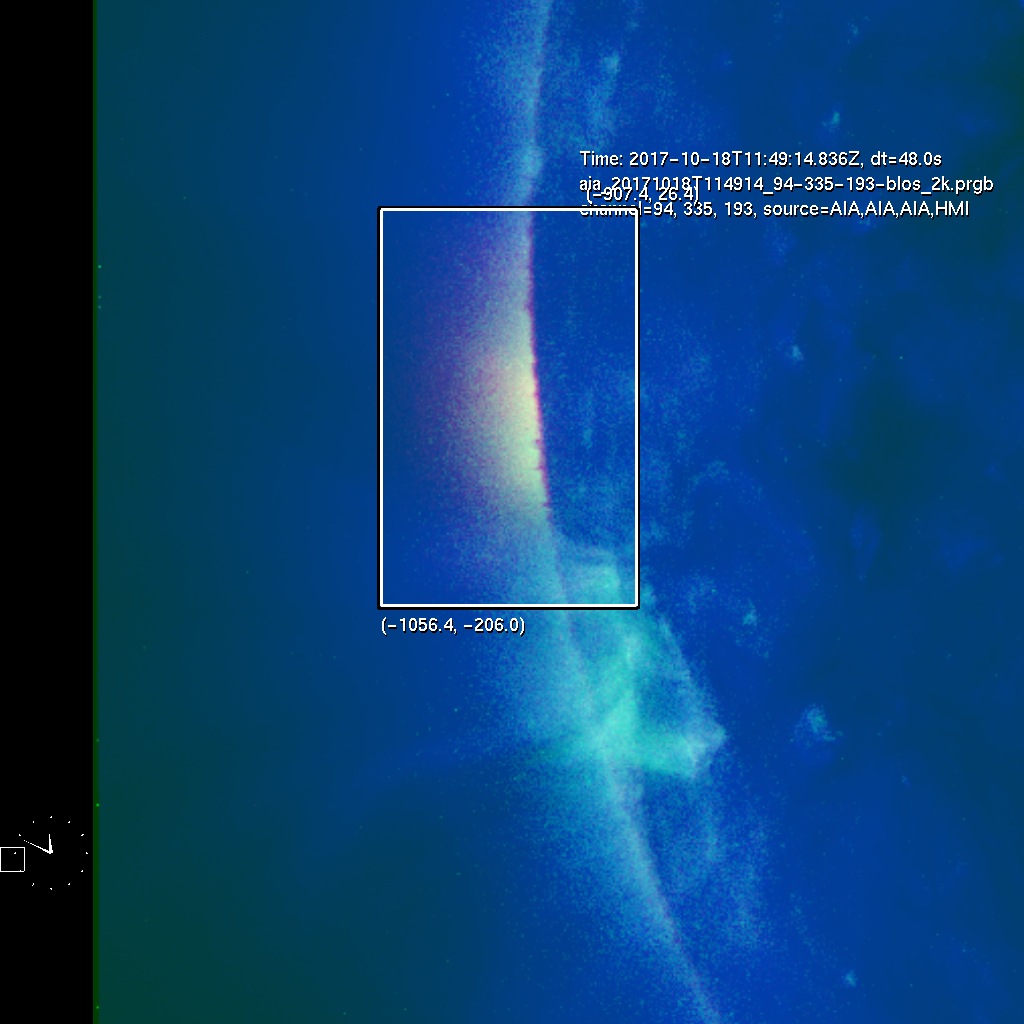
2017-10-18T05:25:14 --> 2017-10-18T14:01:14
Today's GOES X-ray light curves show a long duration event peaked at B2.3. This represents a post-eruption arcade following an eruption from a region some 35 degrees behind the east limb (which turned out to be around the location of AR 12673.) The associated eruption occurred about 2.5 hours before, to the south of what became bright as seen over the limb. This became a bright CME (http://spaceweather.gmu.edu/seeds/mkmovie.php?cme=20171018.053607.w118.v0623.p097&frame=7&r), which was immediately followed by another, similar-looking CME (http://spaceweather.gmu.edu/seeds/mkmovie.php?cme=20171018.071207.w116.v0397.p089&frame=9&r). The projected signature of the second eruption in AIA images is an EUV wave to the north of that associated with the first eruption. Details TBD until all the EUVI data become available.

Detected by jinmeng, Submitted at 2017-10-16T21:53:10
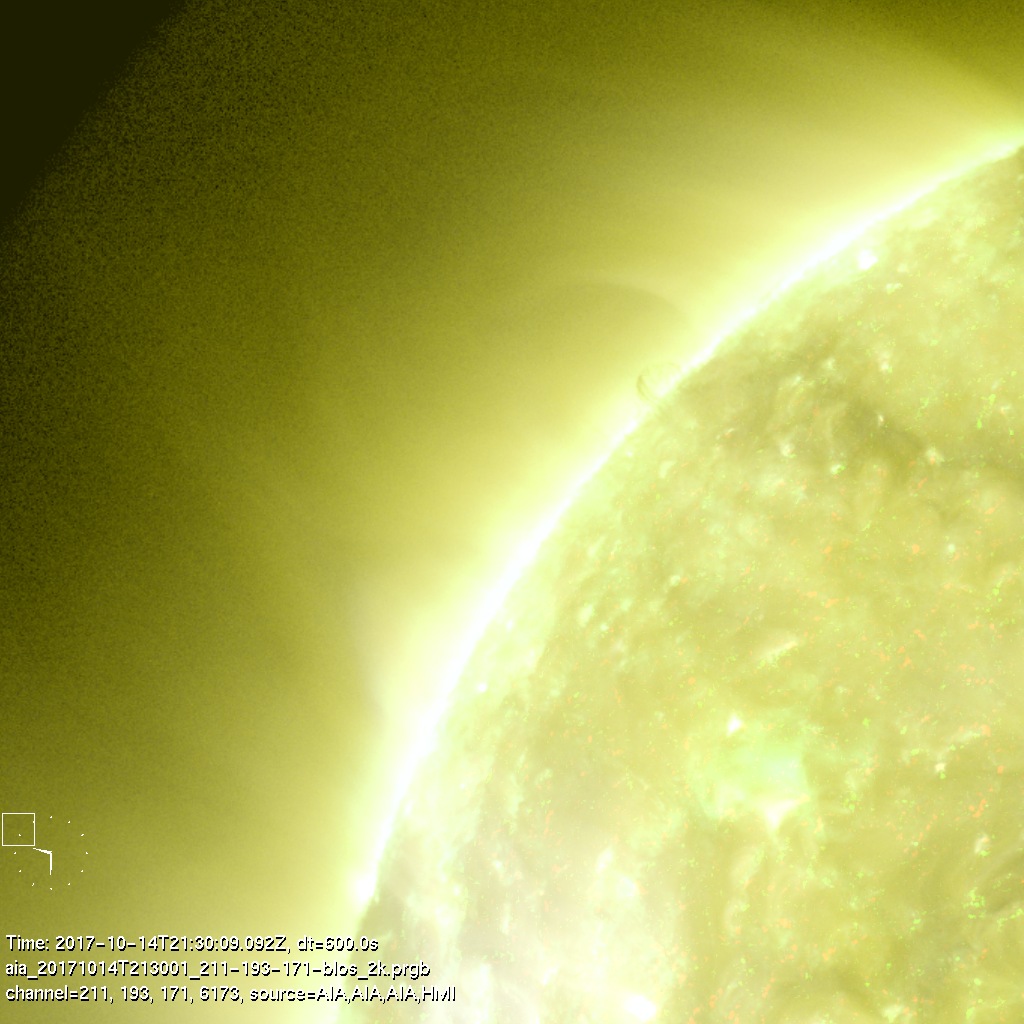
2017-10-14T08:30:09 --> 2017-10-14T23:40:09
A filament eruption was observed at the east limb. The filament material is located at the bottom of a flux rope (dark cavity).
Detected by jinmeng, Submitted at 2017-10-16T21:53:10
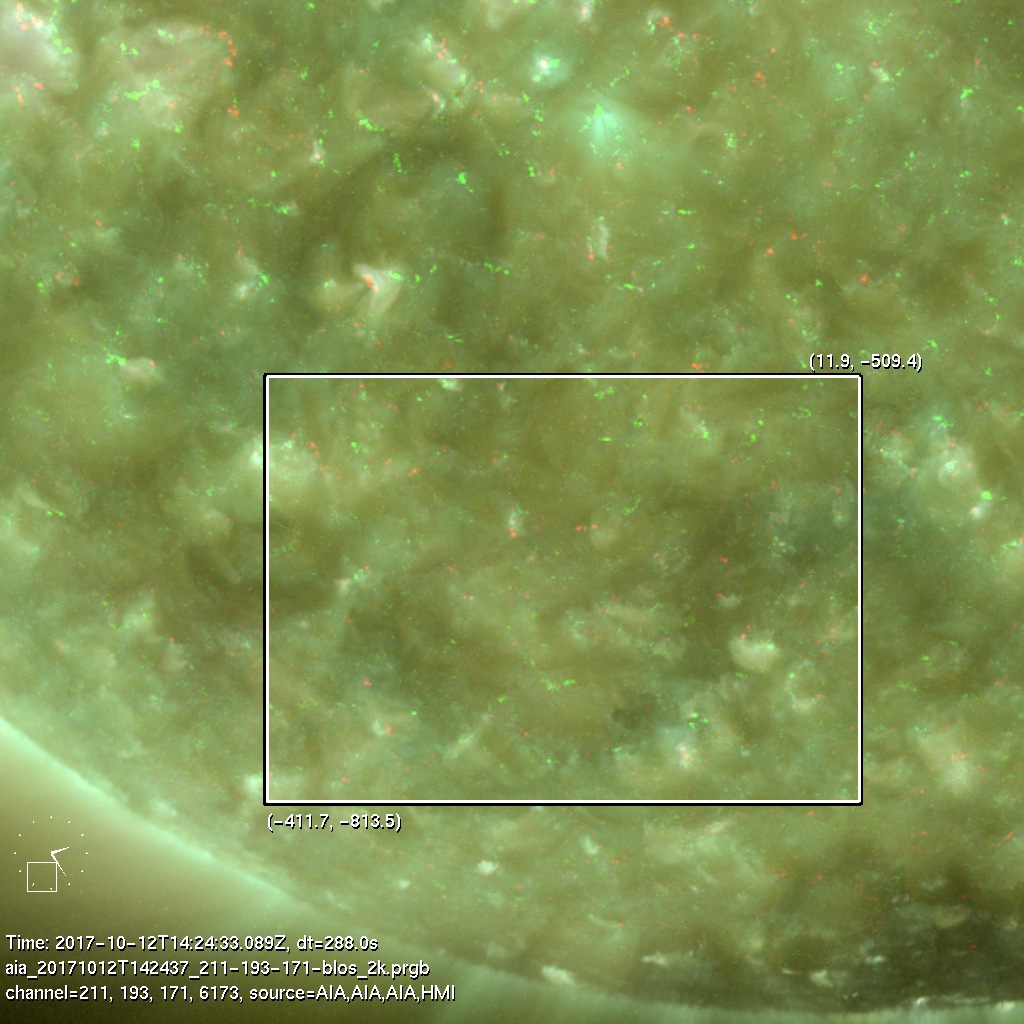
2017-10-12T08:10:09 --> 2017-10-12T16:30:09
A quiet-Sun filament eruption from southern hemisphere.

Detected by jinmeng, Submitted at 2017-10-16T21:52:49
2017-10-10T21:30:09 --> 2017-10-11T00:00:09
A narrow jet-like eruption was observed at the west limb.

Detected by jinmeng, Submitted at 2017-10-16T21:53:05
2017-10-10T21:30:09 --> 2017-10-11T00:00:09
A narrow jet-like eruption was observed at the west limb.
Detected by jinmeng, Submitted at 2017-10-16T21:14:49
2017-10-09T03:00:09 --> 2017-10-09T12:00:09
An eruption at the west limb. The opening and expending of the coronal loops can be seen after the eruption.

Detected by jinmeng, Submitted at 2017-10-16T21:53:10
2017-10-09T17:48:33 --> 2017-10-09T20:55:45
A mini-filament eruption in the northern coronal hole.
Detected by jinmeng, Submitted at 2017-10-16T21:52:47
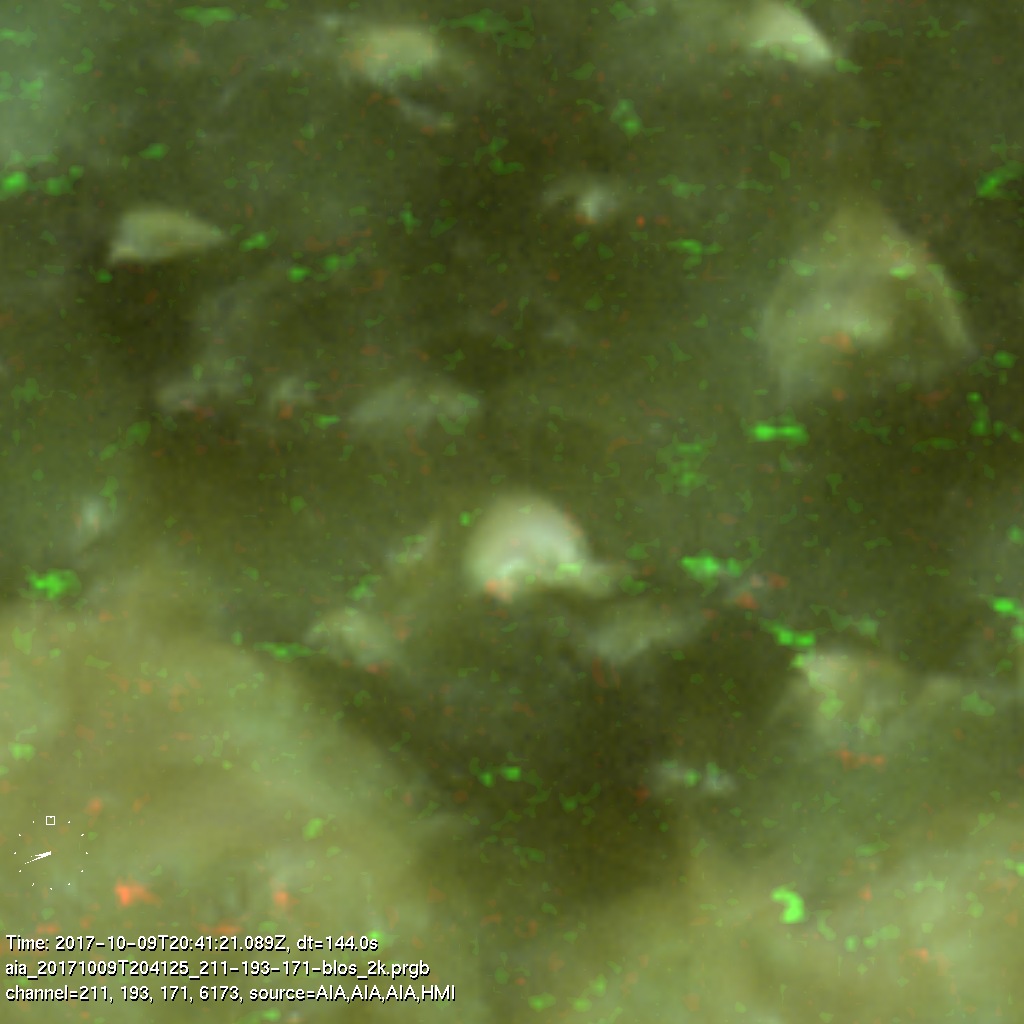
2017-10-09T17:48:33 --> 2017-10-09T20:55:45
A mini-filament eruption in the northern coronal hole.
Detected by Jacob Parker, Submitted at 2017-10-12T16:44:02
2017-09-15T20:20:26 --> 2017-09-15T20:54:29
Adjacent to the IRIS slit there is a region that appears to be continually reconnecting over the course of the OBS. Captured by the slit is a small eruption which has a footprint very near the sunspot.
