
Recent Events Reported by Observers
Previous Next
Detected by schryver, Submitted at 2014-12-22T22:53:33
2014-12-19T05:44:07 --> 2014-12-19T11:28:07
Filament eruption


Detected by schryver, Submitted at 2014-12-22T22:52:16
2014-12-19T11:56:07 --> 2014-12-19T19:08:07
Filament activation


Detected by schryver, Submitted at 2014-12-22T22:38:59
2014-12-18T21:08:03 --> 2014-12-18T23:44:03
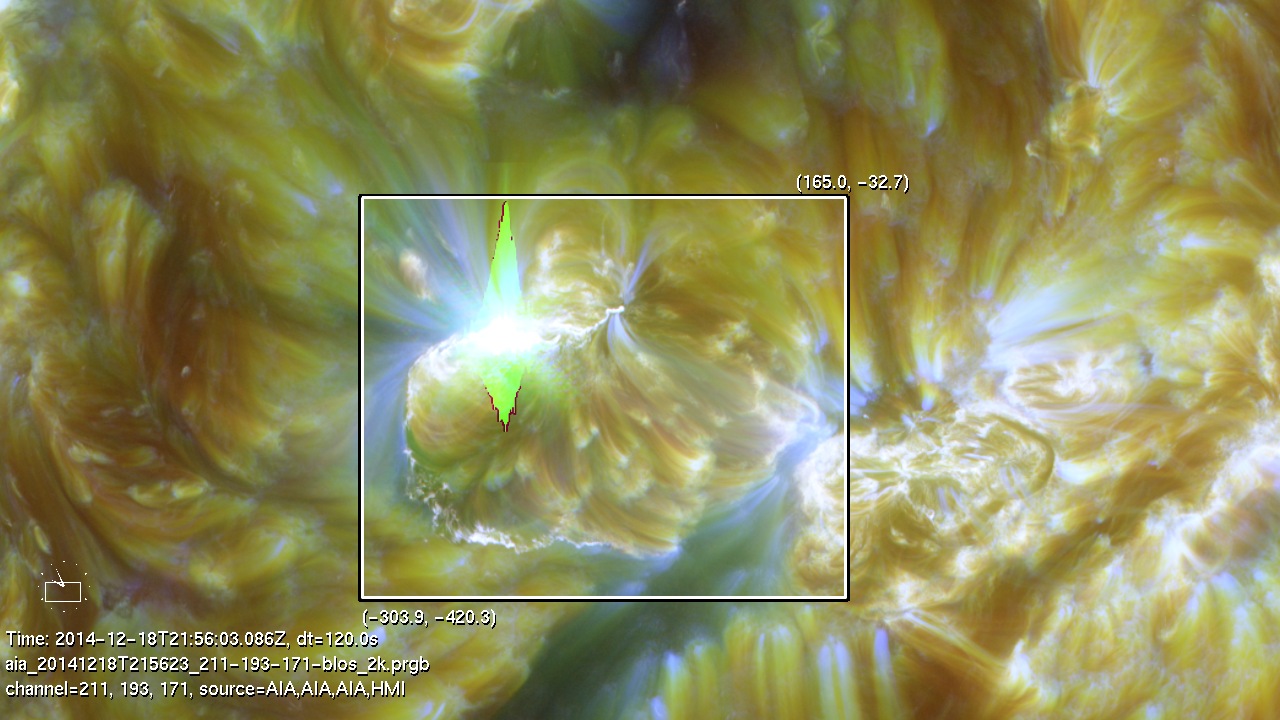
A flare and post-eruption arcade in the central area of an AR, but with a distant ribbon enveloping the entire AR, reaching into the edge of a CH and a transient extension of it on the S side of the region.
Detected by schryver, Submitted at 2014-12-22T22:25:02
2014-12-18T07:40:03 --> 2014-12-18T14:12:03
Filament eruption

Detected by derosa, Submitted at 2014-12-18T18:22:33
2014-12-14T04:00:03 --> 2014-12-14T07:00:03
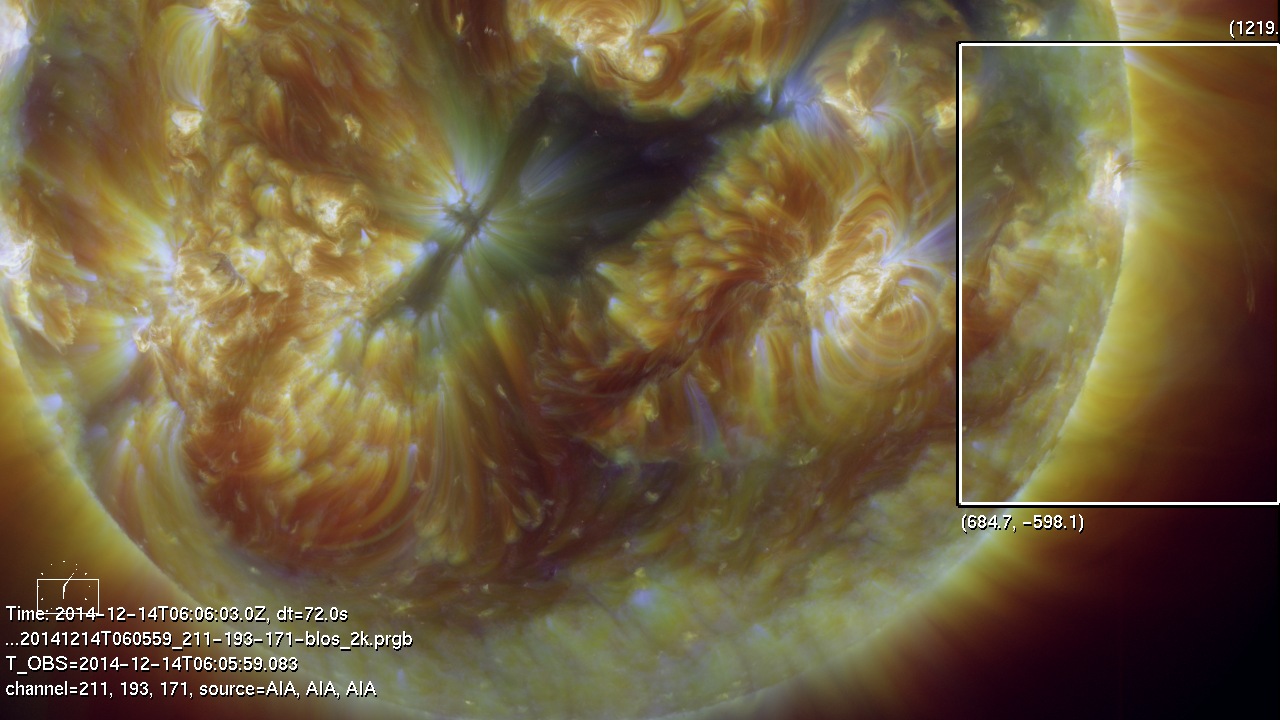
A small filament associated with AR12227 lifts off, but is not energetic enough to fully leave the corona. Part of the ejected material is observed to remain on longer, closed field lines.
Detected by derosa, Submitted at 2014-12-18T18:16:35
2014-12-14T18:00:03 --> 2014-12-15T01:00:03
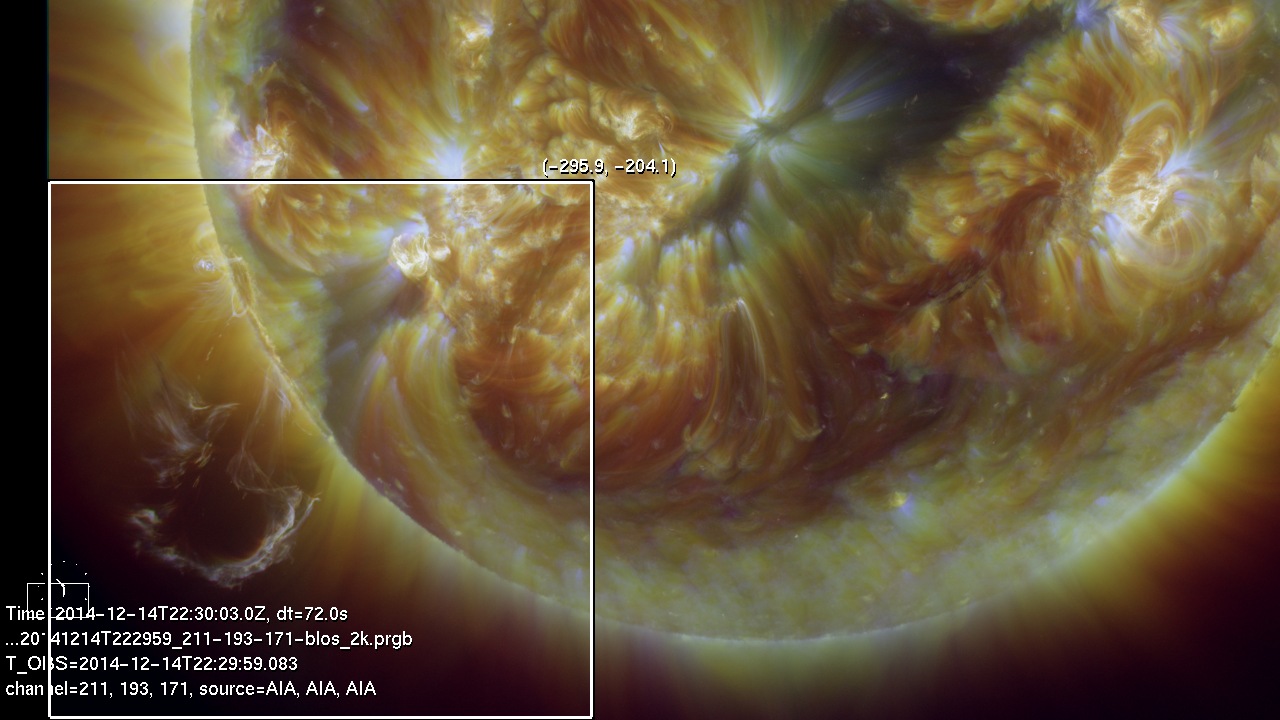
A nice filament eruption on the southeast limb that may be associated with nearby small flares

Detected by derosa, Submitted at 2014-12-18T18:16:34
2014-12-14T18:00:03 --> 2014-12-15T01:00:03
A nice filament eruption on the southeast limb that may be associated with nearby small flares
Detected by schryver, Submitted at 2014-12-18T17:49:57
2014-12-17T03:24:07 --> 2014-12-17T05:28:07
Eruption over (and from behind) the W limb.
Detected by schryver, Submitted at 2014-12-18T17:47:15
2014-12-17T03:32:07 --> 2014-12-17T11:32:07
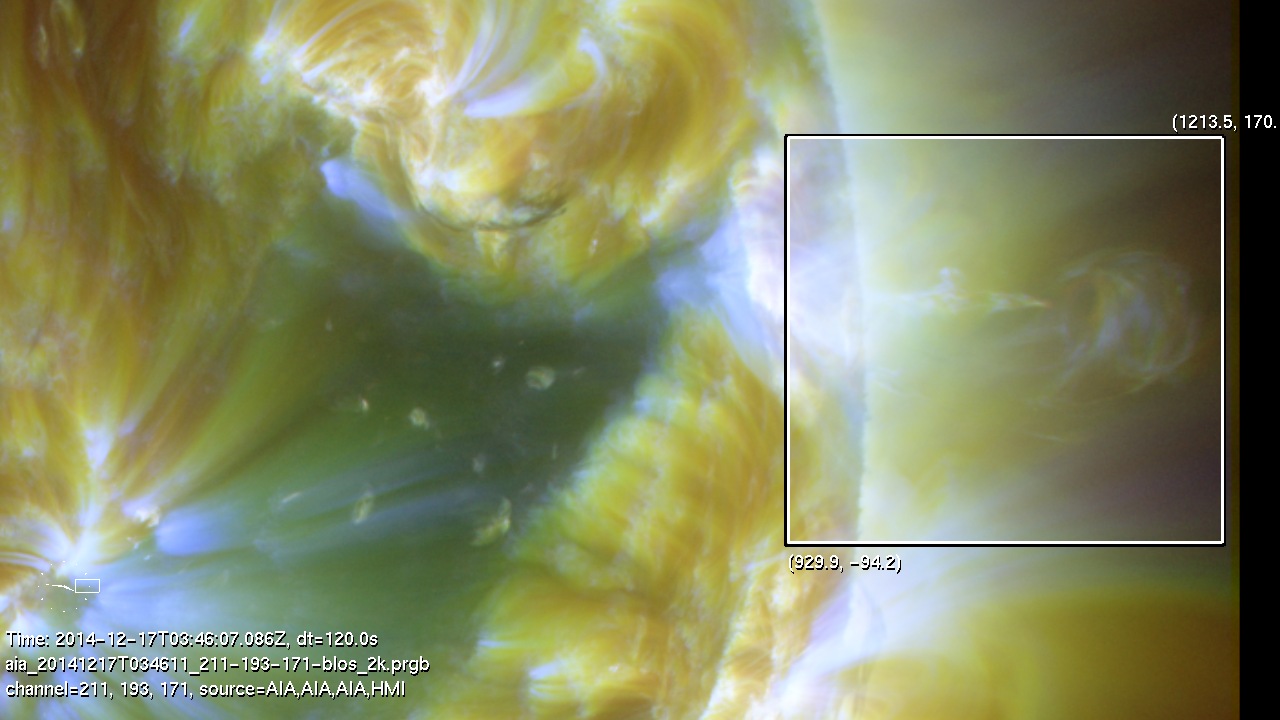
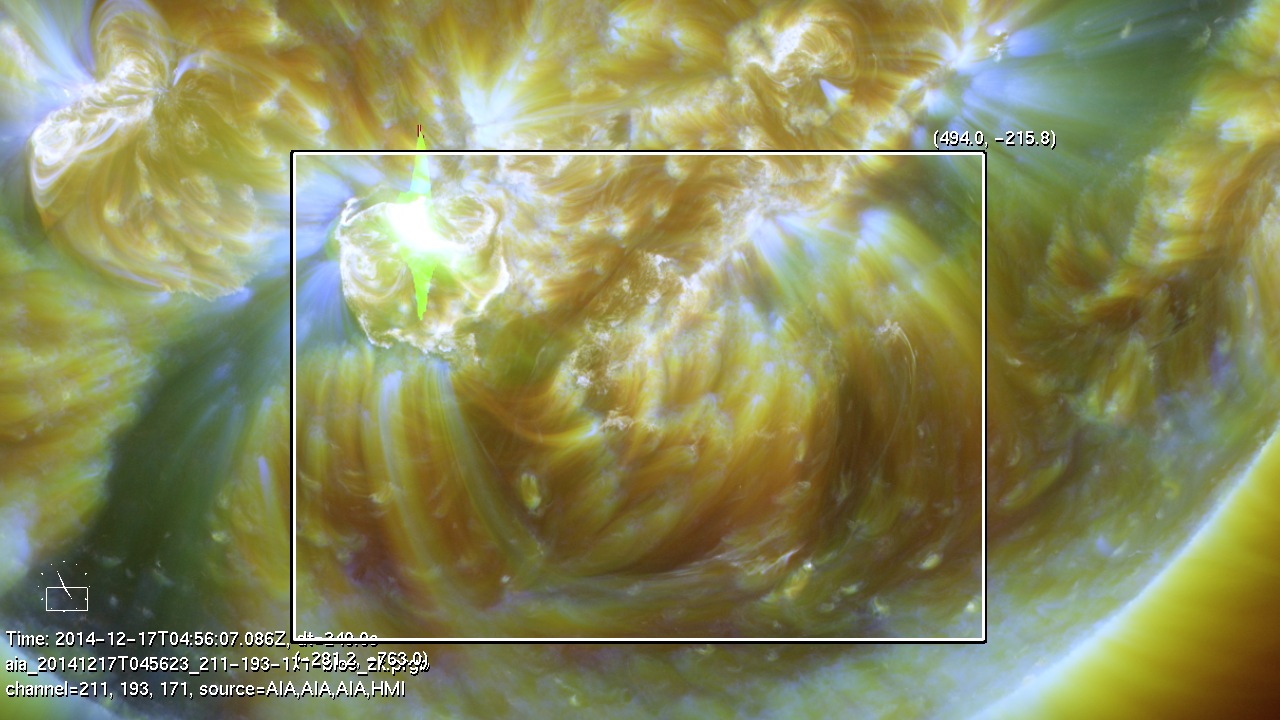
A flare in an AR on the S hemisphere near central meridian, with ribbons around the AR and in the adjacent quiet-Sun unipolar network, with - later - interesting patterns of 'combed' loop bases in the QS area.
Detected by cheung, Submitted at 2014-12-12T20:34:55
2014-12-12T02:50:03 --> 2014-12-12T06:40:03
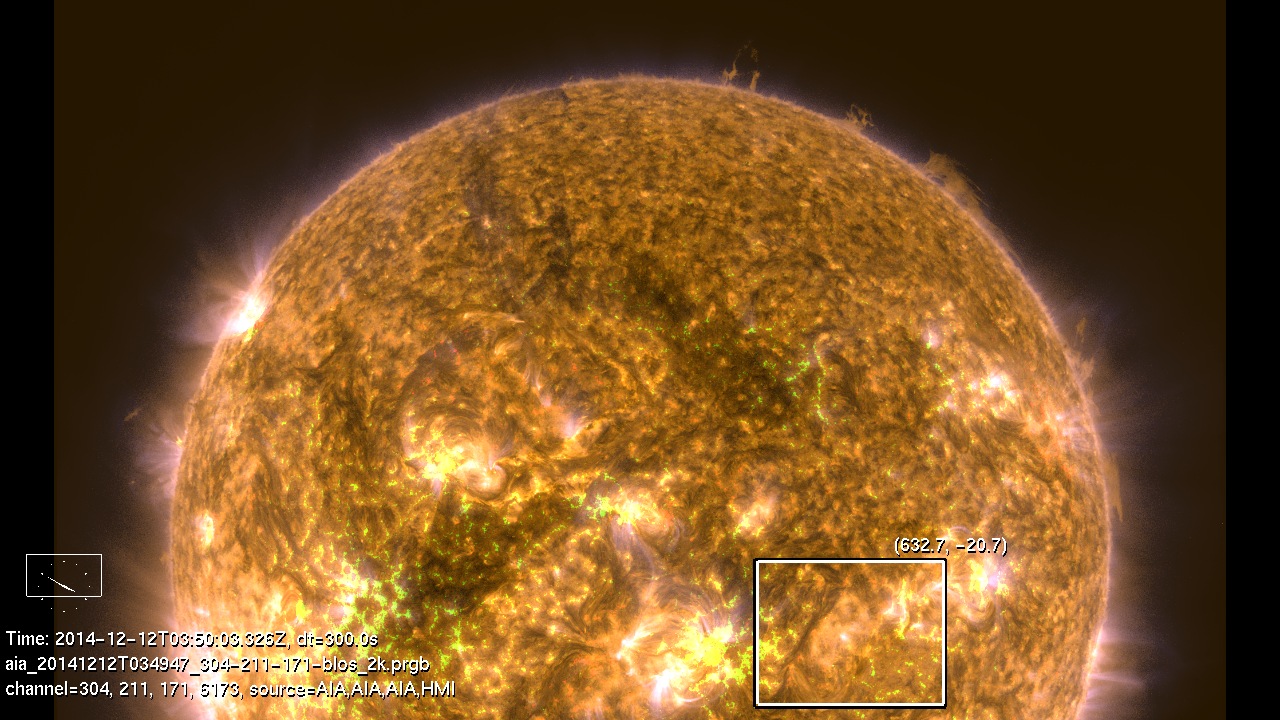
This filament eruption from the southern hemisphere occurs at about the same time as the larger one in the north (http://lmsal.com/hek/her?cmd=view-voevent&ivorn=ivo://helio-informatics.org/FEMET_MarkCheung_20141212_203117). There is no clear evidence that the two are causually related (non-sympathy?).
Detected by cheung, Submitted at 2014-12-12T20:31:31
2014-12-11T23:20:03 --> 2014-12-12T08:50:03
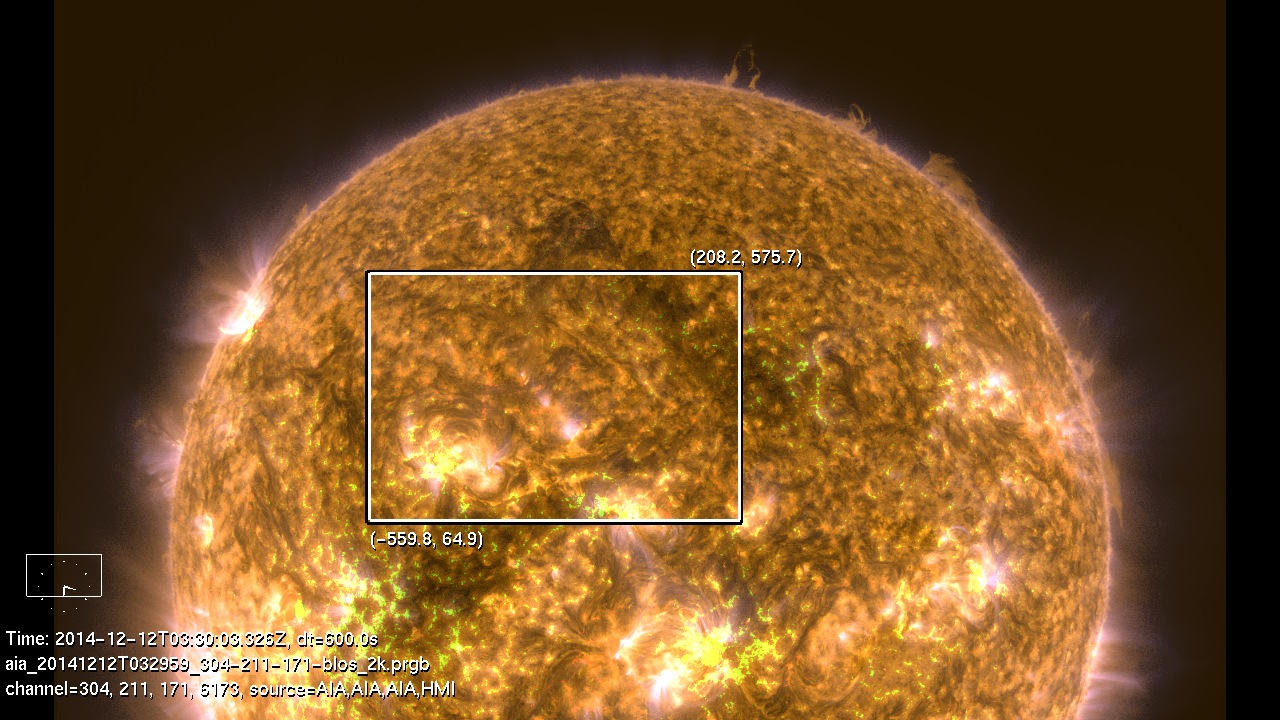
Before eruption, this horseshoe-shaped quiescent filament mainly resided above the polarity inversion line of a decayed AR(s). However the southern end of the filament is anchored close to AR 12232. It is unclear whether the eruption is triggered by the evolution of AR 12232, or flux cancellation across the polarity inversion line below the rest of the filament, or a combination of the two. It is also possible that the launch is triggered by other eruptive events further afield, though none have scales comparable to this eruption. The filament eruption southwest of this event may be a candidate for sympathy, though it is much smaller.

Detected by cheung, Submitted at 2014-12-12T20:08:55
2014-12-09T00:00:04 --> 2014-12-09T23:50:04
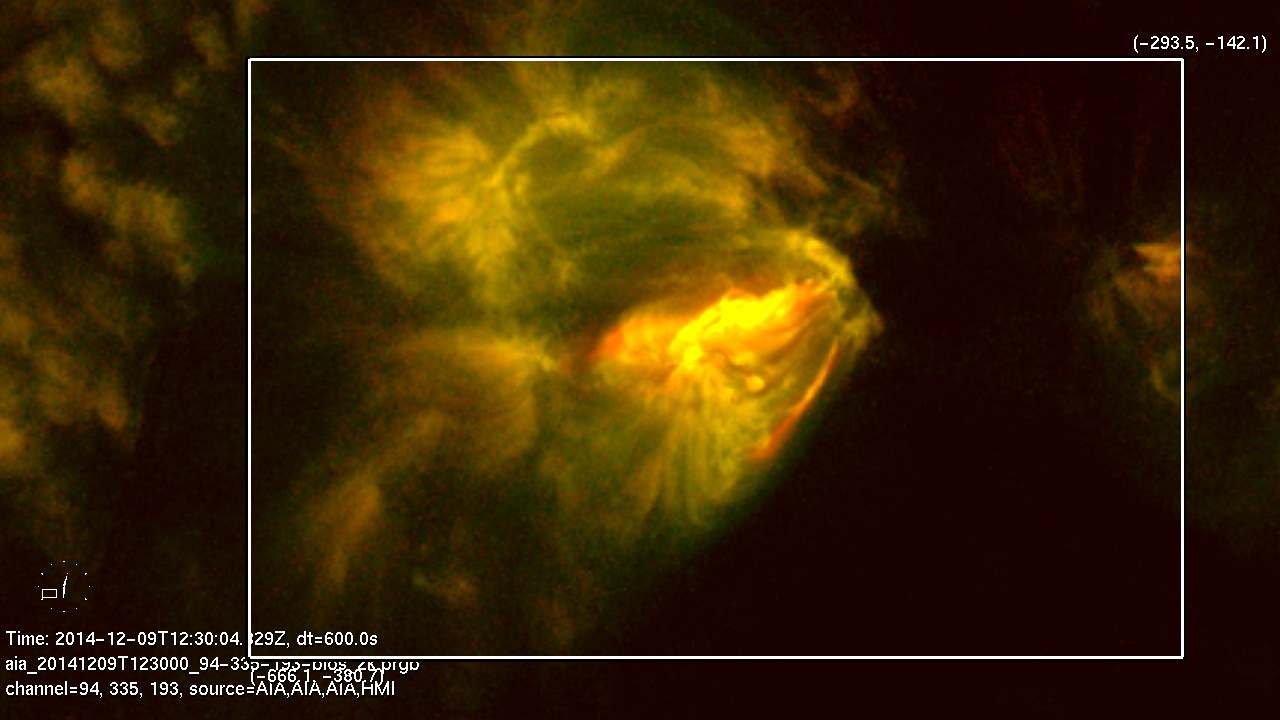
The disturbances caused by the flaring activity in this emerging flux region seems to be relatively local. The EUV loop structures indicates much of the magnetic flux from the emerging region is still self-contained or connected to ambient flux located within a few tens of Mm.
Detected by cheung, Submitted at 2014-12-12T20:02:50
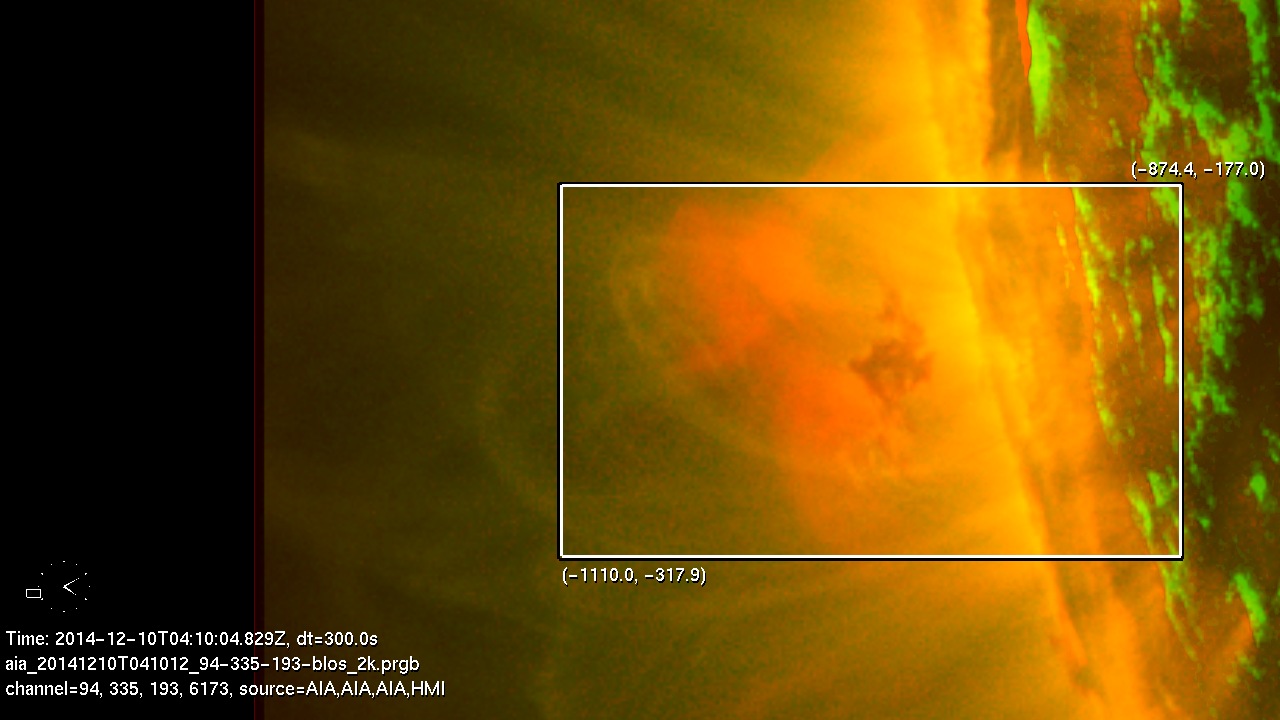
2014-12-10T02:20:04 --> 2014-12-10T06:30:04
At the beginning of this AIA sequence, the filament material is hovering off the east limb, seemingly trapped in dipped magnetic field lines. The abrupt brightening in 94 (red) of some overlying loops suggests some reconnection occurs, leading to a reconfiguration of the magnetic field and heating of the plasma. This seems to perturb the region in which the filament resides, leading to its erosion. At least some fraction of the filament material disappears by flowing down along loops.
Detected by cheung, Submitted at 2014-12-12T19:55:50
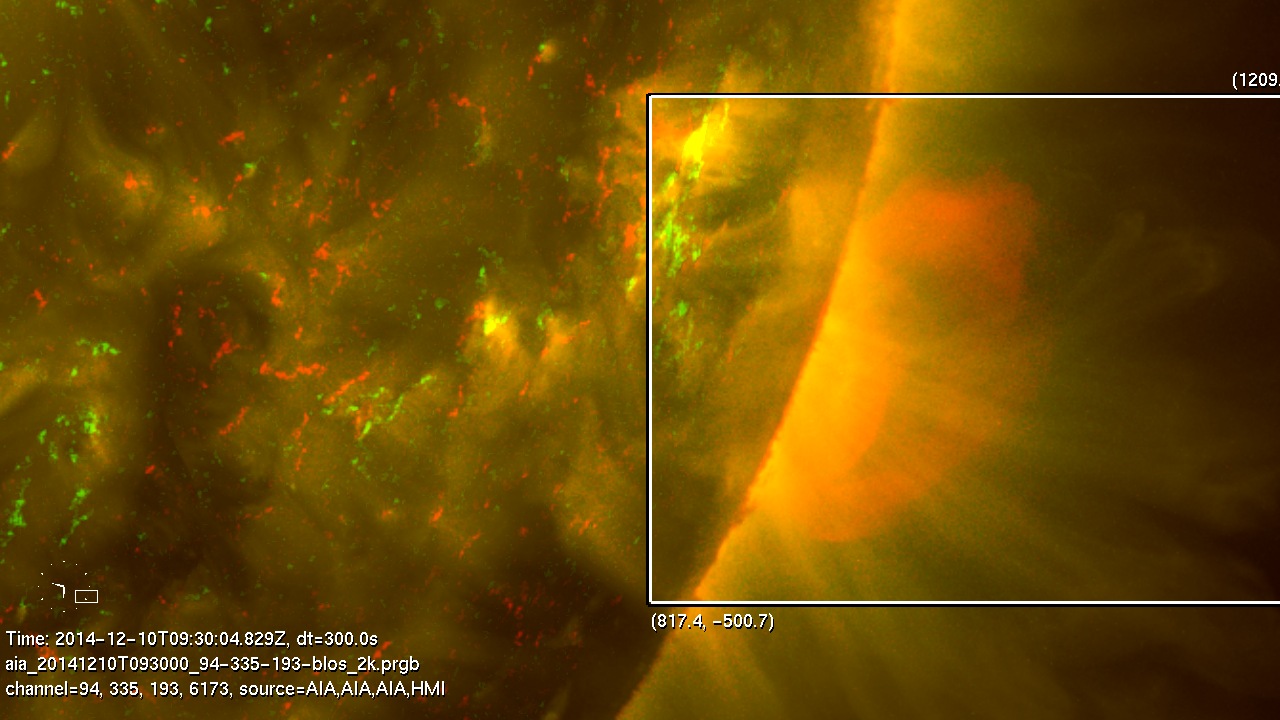
2014-12-10T08:20:04 --> 2014-12-10T13:50:04
This eruption follows a more spectucular one (http://lmsal.com/hek/her?cmd=view-voevent&ivorn=ivo://helio-informatics.org/ERMET_MarkCheung_20141212_195120) from the same region.
Detected by cheung, Submitted at 2014-12-12T19:51:38
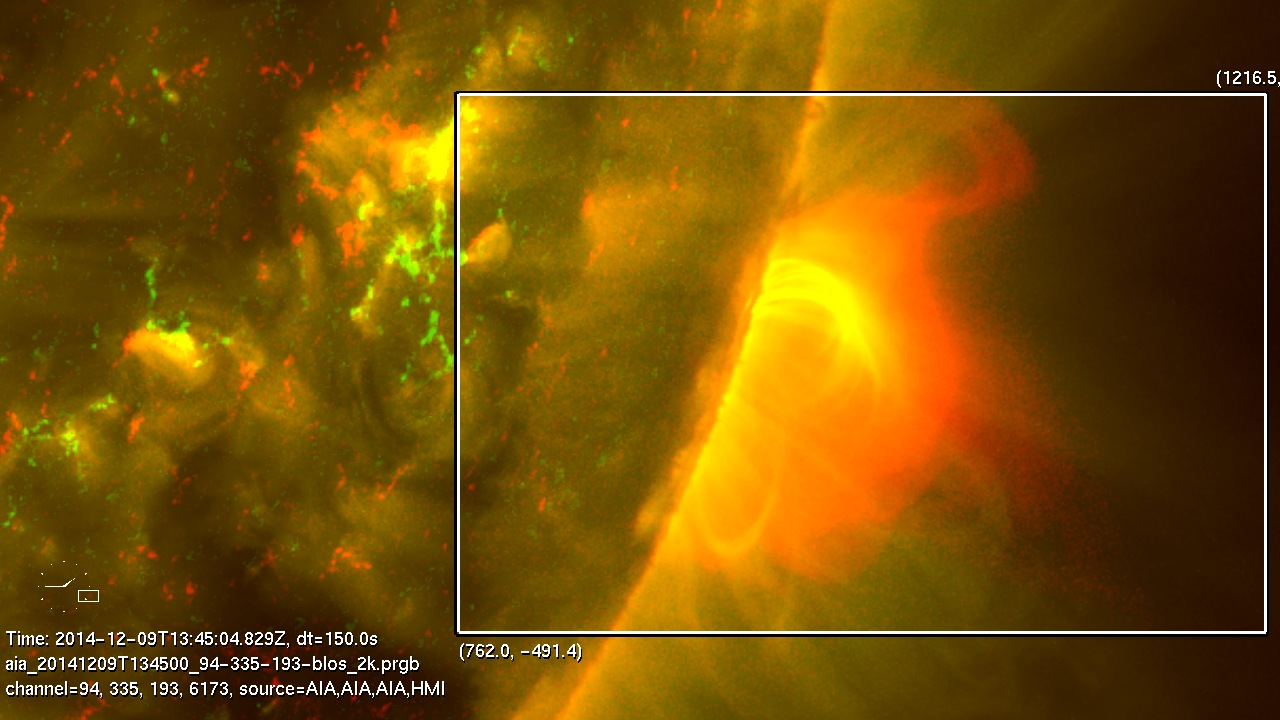
2014-12-09T10:30:04 --> 2014-12-10T02:00:04
This eruption immediately follows another eruption (http://lmsal.com/hek/her?cmd=view-voevent&ivorn=ivo://helio-informatics.org/ERMET_MarkCheung_20141212_194039) from the same region behind the limb. The 193 (yellow) channel shows twisted field structure rising through the corona and out of the AIA field of view. Hot arcade loops (94, red) are left in its wake. As the bright front of the arcade propagates outward, sunward propagating voids (tadpoles) can be seen interleaving the fuzzy arcade.
Detected by cheung, Submitted at 2014-12-12T19:40:56
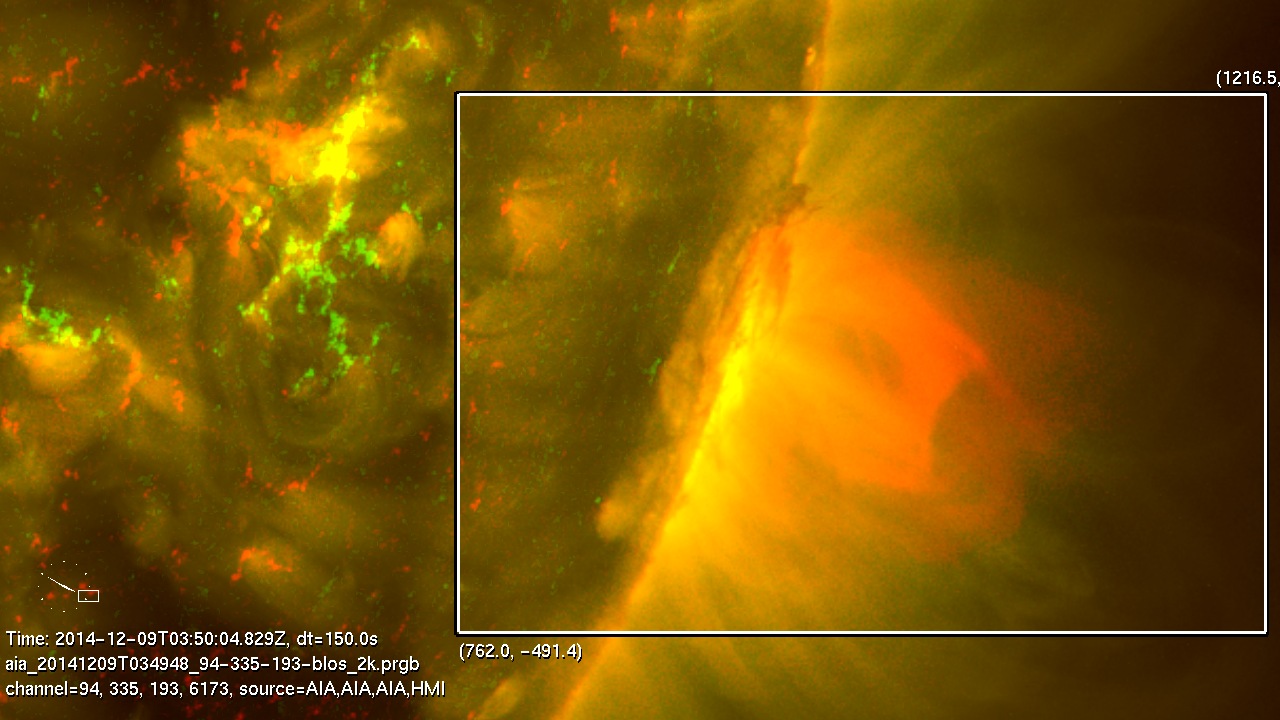
2014-12-09T00:50:04 --> 2014-12-09T10:30:04
The lack of footpoint brightening in the EUV images suggests the source region of this eruption is behind the limb.The post-eruption arcade is nicely highlighted by the enhanced 94 channel brightness (red) above 193 (yellow) loops.
Detected by cheung, Submitted at 2014-12-09T19:40:45
2014-12-08T00:30:04 --> 2014-12-08T00:50:04
Material is ejected to the north of the AR. Due to the curvature of the field lines, the ejecta is sent on a wild ride. It passes underneath a thin filament, curves upward and then eventually over it.
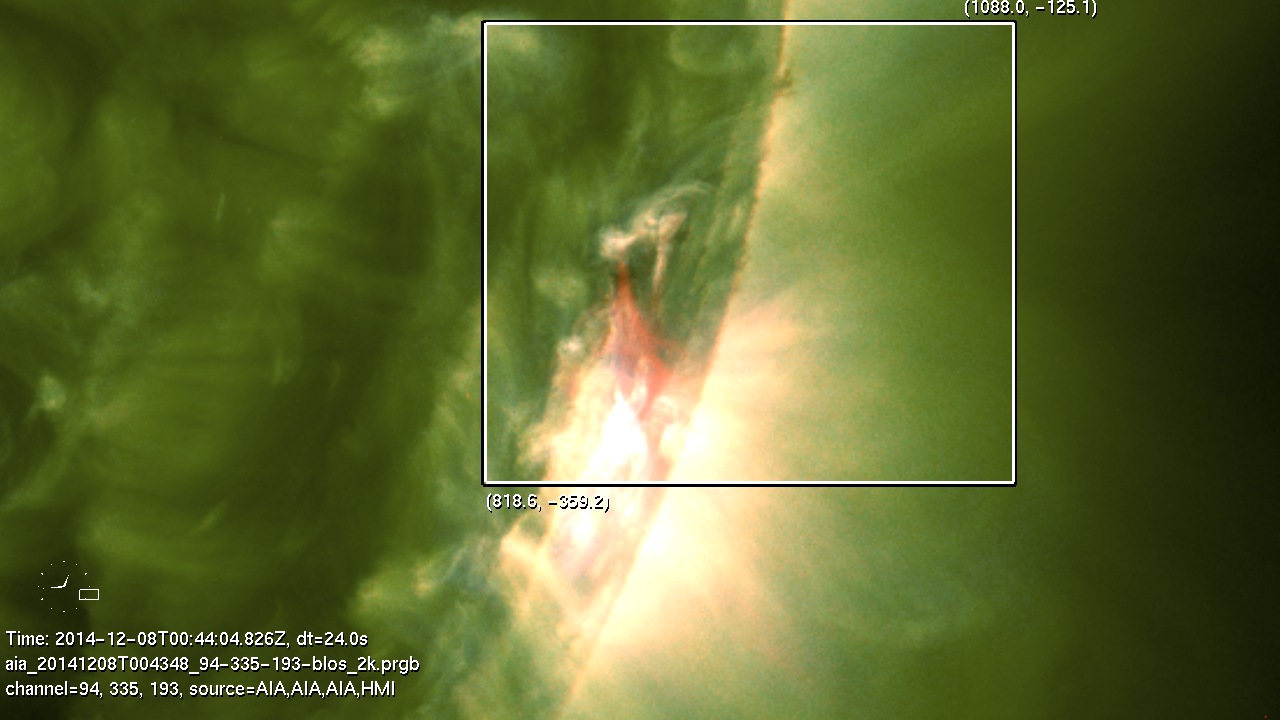
Detected by cheung, Submitted at 2014-12-09T19:40:45
2014-12-08T00:30:04 --> 2014-12-08T00:50:04
Material is ejected to the north of the AR. Due to the curvature of the field lines, the ejecta is sent on a wild ride. It passes underneath a thin filament, curves upward and then eventually over it.
Detected by cheung, Submitted at 2014-12-09T19:40:35
2014-12-08T00:30:04 --> 2014-12-08T00:50:04
Material is ejected to the north of the AR. Due to the curvature of the field lines, the ejecta is sent on a wild ride. It passes underneath a thin filament, curves upward and then eventually over it.
Detected by cheung, Submitted at 2014-12-09T19:40:45
2014-12-08T00:30:04 --> 2014-12-08T00:50:04
Material is ejected to the north of the AR. Due to the curvature of the field lines, the ejecta is sent on a wild ride. It passes underneath a thin filament, curves upward and then eventually over it.