
Recent Events Reported by Observers
Previous Next
Detected by Ted Tarbell, Submitted at 2017-07-25T22:40:24
2017-07-20T02:39:42 --> 2017-07-20T02:53:01
Big one with bidirectional jets


Detected by Ted Tarbell, Submitted at 2017-07-25T22:36:44
2017-07-18T08:47:49 --> 2017-07-18T09:08:38
Huh?


Detected by Ted Tarbell, Submitted at 2017-07-25T22:32:53
2017-07-18T07:16:26 --> 2017-07-18T08:03:46
Same as previous but slit perpendicular to limb this time


Detected by Ted Tarbell, Submitted at 2017-07-25T22:30:37
2017-07-18T06:06:45 --> 2017-07-18T06:39:48
Horizontal loops, flows, EEs, coronal rain

Detected by Ted Tarbell, Submitted at 2017-07-25T22:16:22
2017-07-18T23:56:52 --> 2017-07-19T00:13:37
Small flare, horizontal AR loops, some flare ejecta along a loop are under slit

Detected by Ted Tarbell, Submitted at 2017-07-25T22:13:06
2017-07-18T22:20:08 --> 2017-07-18T22:37:21
Small flare, horizontal AR loops, coronal rain
Detected by Ted Tarbell, Submitted at 2017-07-25T22:03:13
2017-07-22T11:50:24 --> 2017-07-22T12:51:23
small jets with slit in good spots


Detected by Ted Tarbell, Submitted at 2017-07-25T21:59:53
2017-07-21T09:11:00 --> 2017-07-21T09:32:04
Slit gets there a little late but sees some of the event

Detected by gchintzo, Submitted at 2017-07-22T01:13:19
2017-07-13T23:30:09 --> 2017-07-14T15:30:09
At least 3 eruptions from AR12667 that concurred/followed the CME eruption of AR12665. The AR is well at the limb (surge in eruptivity possibly due to secondary emergence within/nearby the AR12667)

Detected by gchintzo, Submitted at 2017-07-22T01:08:18
2017-07-13T00:00:09 --> 2017-07-14T06:10:09
The source region of a moderately fast CME (projected to the plane of the sky speed of 556 km/sec; http://spaceweather.gmu.edu/seeds/mkmovie_ql.php?cme=20170714.013612.w109.v0556.p251&frame=5). Note the interesting "rapture" of connectivity with smaller AR 12666.


Detected by gchintzo, Submitted at 2017-07-22T01:00:07
2017-07-08T14:20:09 --> 2017-07-10T07:20:09
A complex, largely bipolar Active Region AR 12665 showing a few jet-like ejections and transient brightenings above the core region. None of these ejections led to a CME.


Detected by gchintzo, Submitted at 2017-07-22T00:50:11
2017-07-06T01:40:09 --> 2017-07-08T02:30:09
A filament (dark feature) is progressively lifting up, until its eruption is switched off. Material flowing after the failed eruption shows longer connectivities of this magnetic structure towards the West. At the end of the movie, the filament is seen to osciallate along the North/South direction.


Detected by gchintzo, Submitted at 2017-07-22T00:45:15
2017-07-06T01:40:09 --> 2017-07-08T04:40:09
Two small, ephemeral emerging flux regions in the south hemisphere of the sun. Ephemeral regions are small and short-lived (typically 1-2 days).


Detected by gchintzo, Submitted at 2017-07-22T00:42:50
2017-07-05T00:00:09 --> 2017-07-06T23:00:09
A trans-equatorial coronal hole crossing the central meridian of the sun.

Detected by jinmeng, Submitted at 2017-07-19T02:41:29
2017-07-18T00:00:09 --> 2017-07-18T23:00:09
Small-scale flux emergence observed in the quiet Sun region.
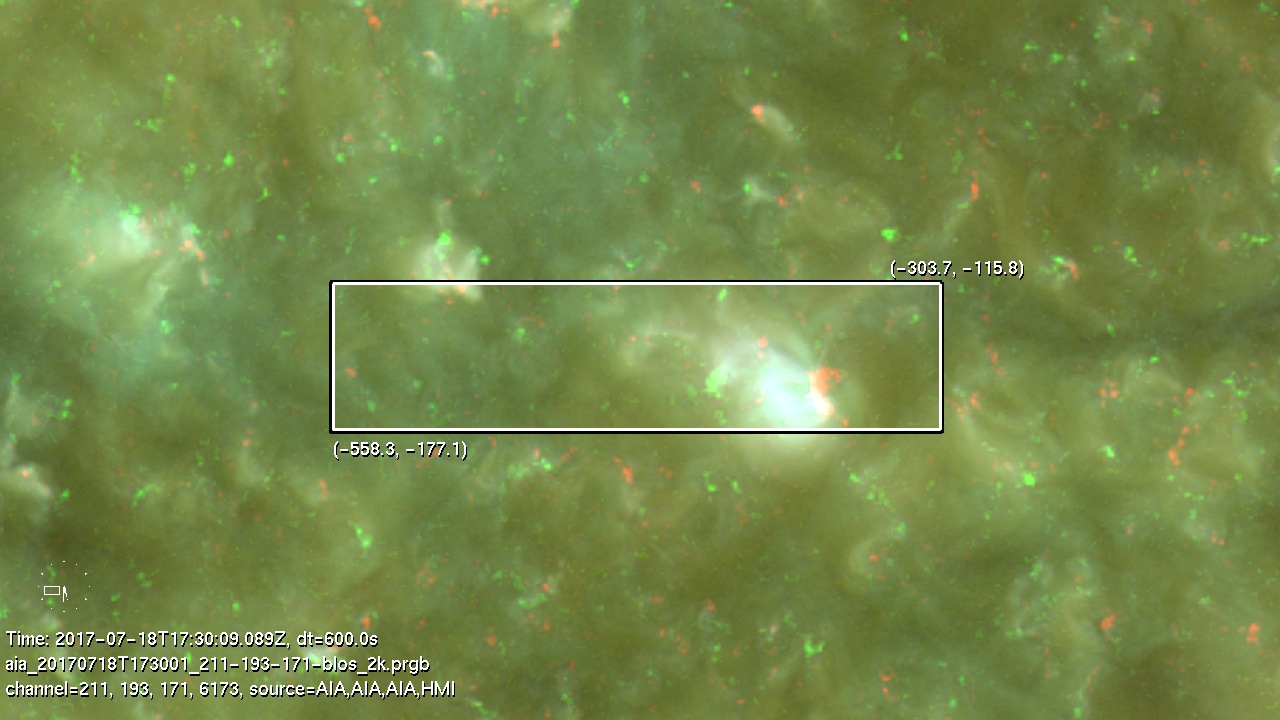

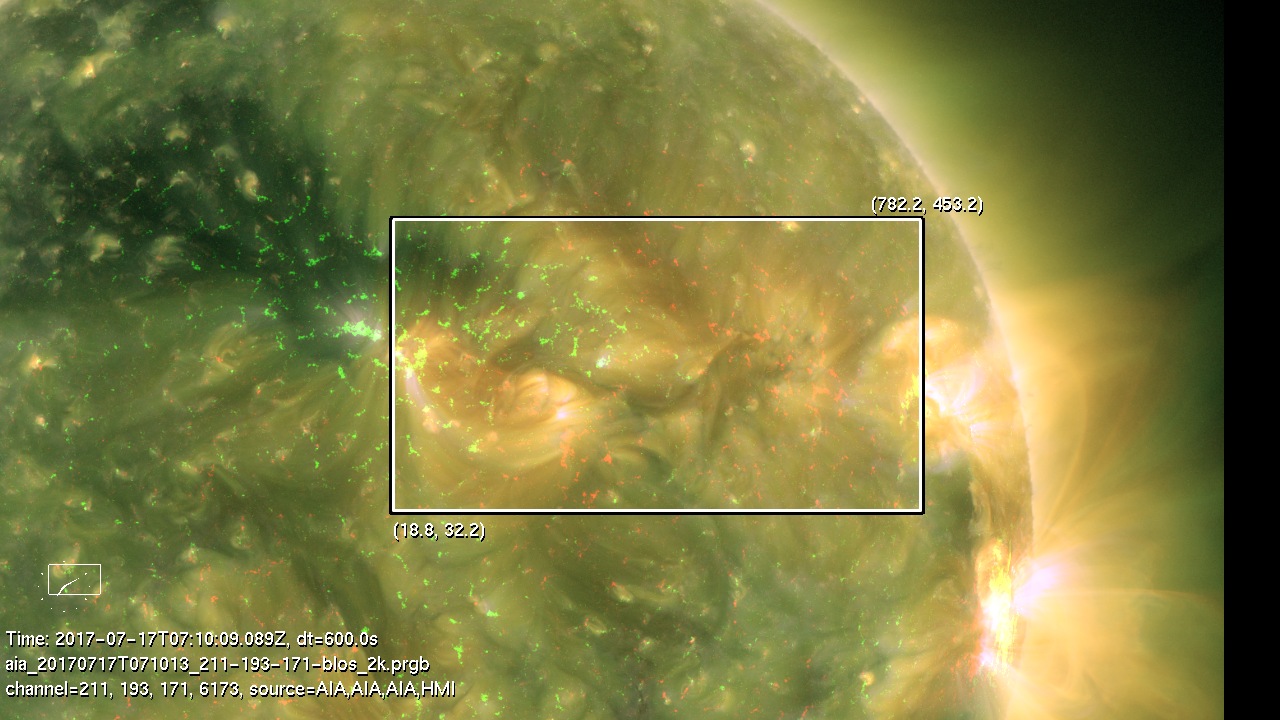
Detected by jinmeng, Submitted at 2017-07-18T21:40:57
2017-07-16T17:20:09 --> 2017-07-17T08:20:09
a long quiet Sun filament eruption was observed.
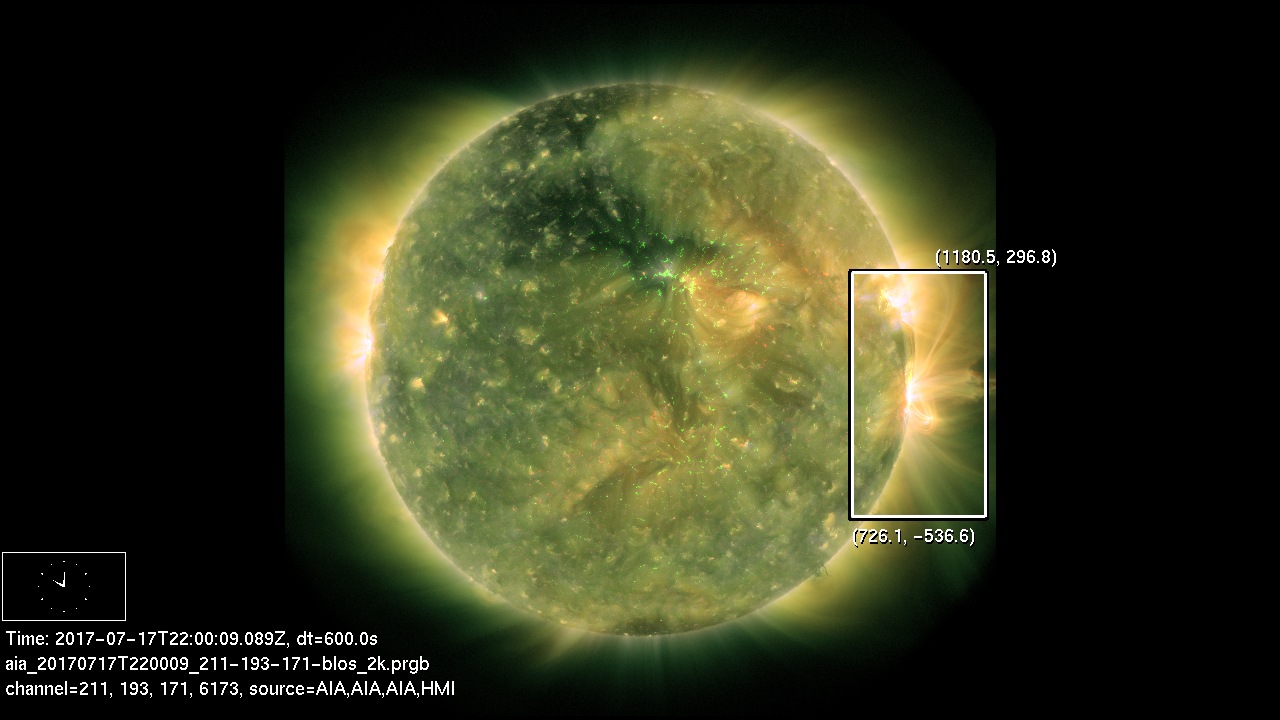
Detected by jinmeng, Submitted at 2017-07-18T21:06:06
2017-07-17T12:30:09 --> 2017-07-18T00:00:09
An eruption was observed at the west limb.
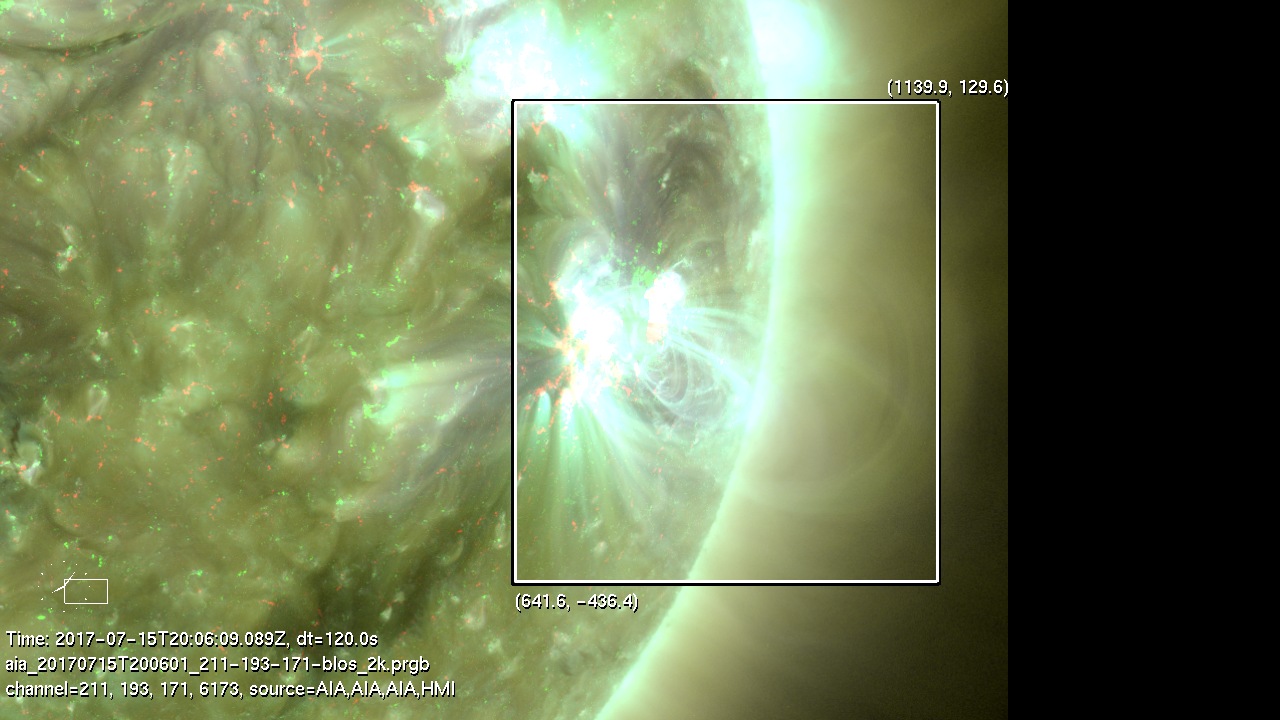
Detected by jinmeng, Submitted at 2017-07-18T18:49:49
2017-07-15T18:56:09 --> 2017-07-15T21:02:09
A confined eruption was observed near the west limb. The coronal loops are pushed to a higher altitude but not opened up.
Detected by jinmeng, Submitted at 2017-07-18T19:40:53
2017-07-14T00:00:09 --> 2017-07-14T04:24:09
A more clear view of the sympathetic eruption in the running difference movie. The second eruption near the west limb started right after the disturbance of the first eruption arrived.

Detected by jinmeng, Submitted at 2017-07-18T19:40:52
2017-07-14T00:00:09 --> 2017-07-14T04:24:09
Sympathetic eruptions observed in the west hemisphere. The eruption from AR 12665 seems to cause another eruption near the west limb.
